
Why Does My Parents' Income Affect My Financial Aid?
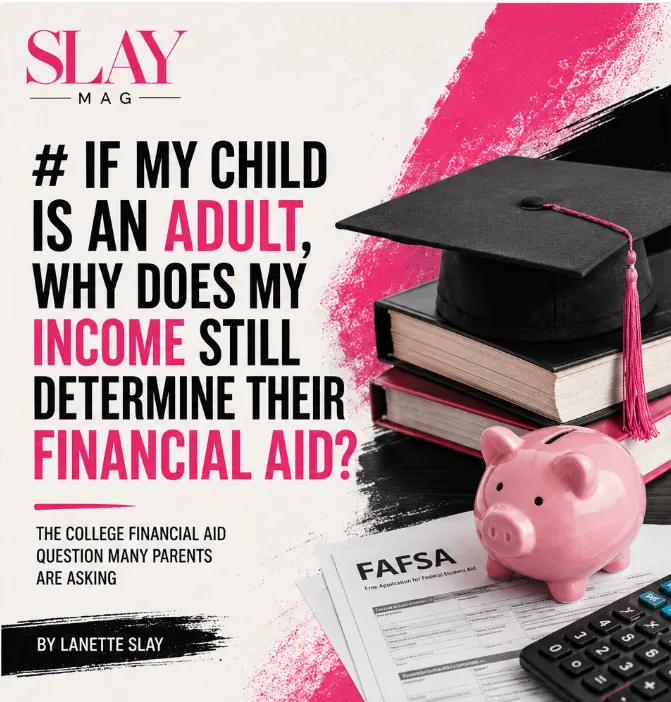
Parents often ask the same question: If my child is considered an adult in college, why does my income still affect their financial aid eligibility? S

The College Financial Aid Question Many Parents Are Asking
For many families, the college financial aid process can feel confusing, frustrating, and at times, contradictory.
A student turns 18 and is legally considered an adult.
Colleges often remind parents of this reality when discussing grades, academic records, class schedules, financial accounts, or other educational matters. In many situations, school officials cannot speak with parents without the student's permission because of federal privacy laws and regulations.
Yet when it comes to financial aid, many students are still considered dependent on their parents.
That means a parent's income can significantly impact whether a student qualifies for grants, work-study programs, subsidized loans, and other forms of assistance.
For some families, this creates a simple question:
If my child is considered an adult, why does my income still matter?
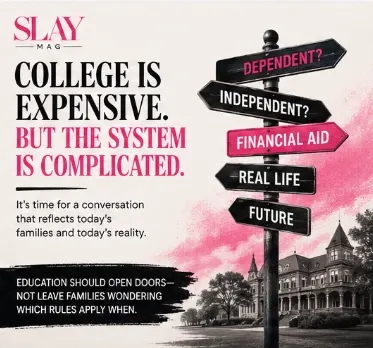
Understanding the Financial Aid System
The federal financial aid process is largely based on the assumption that parents contribute financially to their children's college education.
When students complete the Free Application for Federal Student Aid (FAFSA), most are classified as dependent students unless they meet specific criteria that would qualify them as independent.
As a result, parental income and financial information are often included when determining eligibility for aid.
The system was designed to allocate limited financial resources to students with the greatest demonstrated financial need.
But for many families, the reality is more complicated.
The Gap Between Policy and Reality
Not every family situation fits neatly into a formula.
Some parents may earn enough income on paper to reduce a student's aid eligibility but may still be managing:
- High housing costs
- Medical expenses
- Existing debt
- Caregiving responsibilities
- Multiple children in college
- Economic uncertainty
Others may simply be unable to contribute as much as the financial aid calculations assume.
As a result, students can sometimes find themselves in a difficult position.
They may not qualify for significant financial aid because of parental income, yet their families may not have the resources available to cover the remaining costs.
Privacy Versus Dependency
This is where many parents experience frustration.
When it comes to educational records, grades, and academic discussions, colleges often treat students as independent adults.
Parents may be unable to receive information without signed consent from the student.
However, when financial aid is calculated, the system frequently continues to view those same students as financially connected to their parents.
For many families, this creates a sense of inconsistency.
The student is considered independent in some areas but dependent in others.
The Student Perspective
Many college students are working hard to establish independence.
They may:
- Hold part-time jobs
- Pay personal expenses
- Manage their own schedules
- Live away from home
- Make major life decisions
Yet they often discover that their own income is not the primary factor used to determine financial aid eligibility.
This can be especially frustrating for students who are trying to take responsibility for their education while navigating rising tuition costs.

Is There a Better Solution?
There is no simple answer.
Some argue that parental income should continue to be considered because many families do help support college expenses.
Others believe financial aid formulas should place greater emphasis on a student's actual financial circumstances once they reach adulthood.
Still others suggest there should be more flexibility for unique family situations that don't fit traditional models.
Regardless of where someone stands, one thing is clear:
The conversation about college affordability is far from over.
Rising Costs Continue to Impact Families
College tuition, housing, textbooks, transportation, and everyday living expenses continue to increase.
As families work to balance these costs, many are questioning whether current financial aid systems accurately reflect the realities facing today's students and parents.
The goal of financial aid is to expand educational opportunities.
The challenge is ensuring those opportunities remain accessible to students from a wide range of backgrounds and financial situations.
The SLAY Perspective
Perhaps the question isn't whether students should be considered adults or dependents.
Perhaps the bigger question is whether the current system adequately reflects the realities families face today.
For many parents and students, the frustration isn't simply about financial aid.
It's about consistency.
If students are expected to function as adults in one area of higher education, many families believe there should be a broader conversation about how independence is defined throughout the entire college experience.
As tuition costs continue rising, these conversations will likely become even more important in the years ahead.
Because education should open doors and not leave families wondering which rules apply when.
About Slay Magazine
Slay Magazine is a lifestyle-driven media platform highlighting events and community impact. We cover stories that inspire excellence, elevate voices, entertain, and celebrate purpose-driven leadership.
For press coverage, media partnerships, interviews, or event appearances, connect with us:
📱 Social Media: @theslaymagazine
📞 Phone: 469-560-0565
Stay inspired. Stay focused. Stay slaying.