
Why an Ergonomic Office Setup Matters
An ergonomic office setup is more than comfort it’s essential to protecting your body. After a recent physical therapy visit, Slay Magazine breaks down why proper workspace alignment matters and how to set it up correctly.

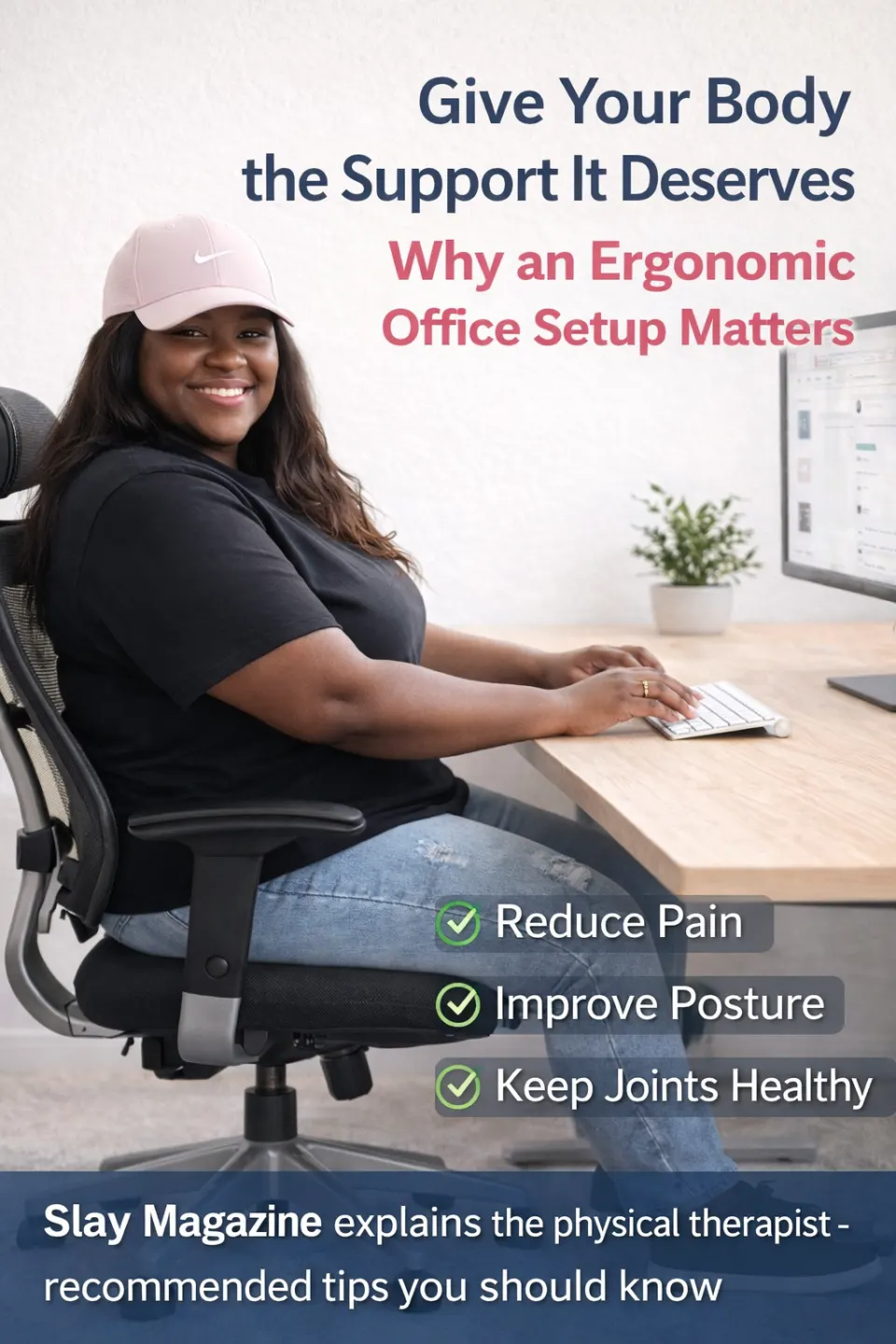
SLAYing Your Workday:
Why an Ergonomic Office Setup Is Essential for Your Body
In today’s work-from-anywhere culture, many of us spend hours seated at desks often without giving much thought to how our workspace affects our bodies. After a recent visit to physical therapy, I was reminded just how important an ergonomic office setup truly is.
My physical therapist emphasized that many common aches and pains such as neck stiffness, lower back pain, shoulder tension, wrist discomfort aren’t always caused by injury. Oftentimes, they stem from how we sit, type, and position our bodies day after day.
An ergonomic workspace isn’t about luxury furniture or trendy setups. It’s about protecting your body, improving comfort, and supporting long-term health.
What Does “Ergonomic” Really Mean?
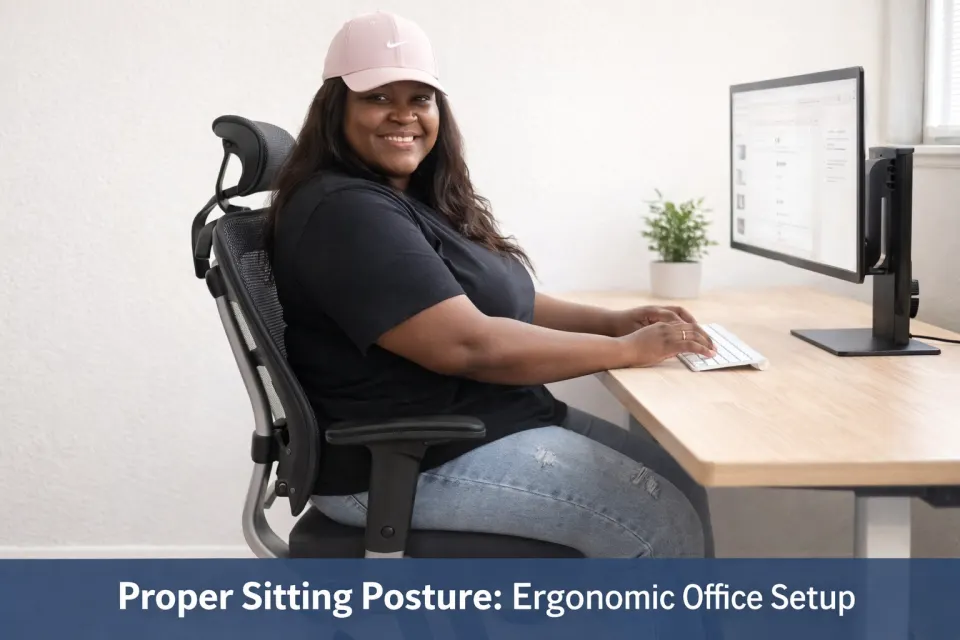
Ergonomics is the science of designing your workspace to fit your body and not forcing your body to adapt to poor positioning. When your desk, chair, and screen are aligned properly, your muscles work more efficiently and strain is reduced. According to my physical therapist, even small adjustments can significantly impact posture, circulation, and joint health.
How Poor Office Setup Affects the Body
A non-ergonomic setup can quietly take a toll over time. Slouching, craning the neck forward, or typing with unsupported wrists places stress on muscles and joints that aren’t meant to handle prolonged strain.
Common issues linked to poor ergonomics include:
- Neck and shoulder tension
- Lower back pain
- Wrist and forearm strain
- Hip tightness
- Headaches caused by posture-related tension
My physical therapist explained that these issues often build gradually, making them easy to ignore until discomfort becomes chronic.
Key Elements of an Ergonomic Office Setup
A healthy workspace focuses on alignment, support, and movement.
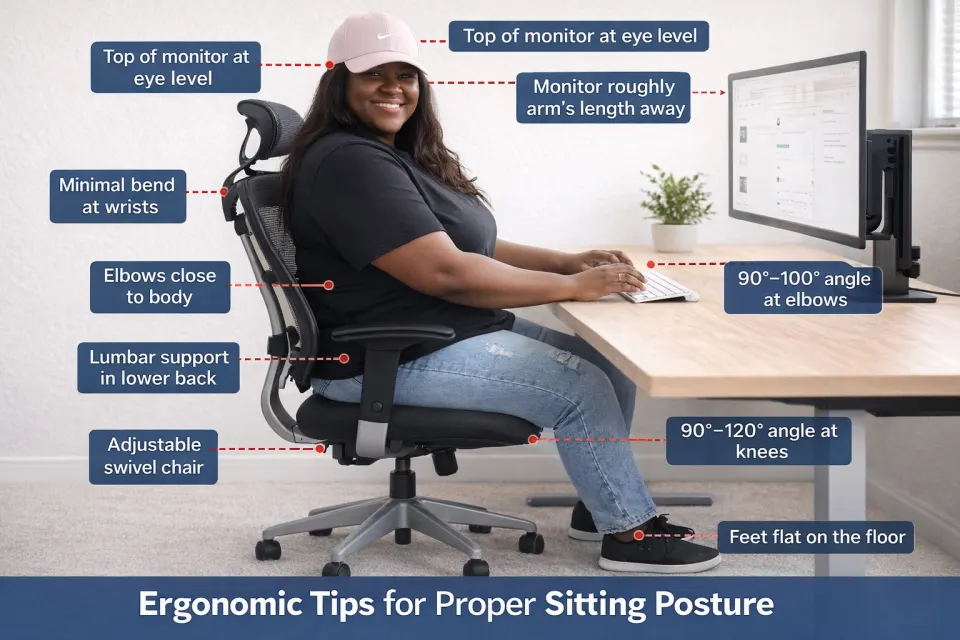
Your chair should support the natural curve of your spine, with feet flat on the floor and knees at about hip level. The screen should be at eye level to prevent neck strain and your keyboard & mouse should allow your wrists to stay neutral not bent upward or downward.
Perhaps most importantly, my physical therapist stressed that no setup replaces movement. Even with perfect ergonomics, staying in one position too long can cause stiffness and discomfort.
The Importance of Movement and Breaks
An ergonomic setup works best when paired with regular movement. Standing, stretching, and walking breaks throughout the day help reset posture and improve circulation.
My therapist recommended:
- Standing or stretching every 30–60 minutes
- Gentle neck and shoulder mobility exercises
- Short walks to reduce stiffness
These habits support your body just as much as your chair or desk.
Investing in Your Body Is Investing in Your Productivity
Beyond comfort, proper ergonomics can improve focus, energy, and productivity. When your body isn’t fighting discomfort, your mind is free to concentrate. An ergonomic workspace is a form of self-care especially for professionals who spend long hours working, creating, or managing responsibilities.
SLAY Perspective
Your body supports everything you do. Supporting it back through thoughtful workspace design and movement isn’t optional; it’s essential. At Slay Magazine, we believe wellness shows up in everyday choices and sometimes the most powerful change starts right at your desk.
About Slay Magazine
Slay Magazine is a lifestyle-driven media platform highlighting events and community impact. We cover stories that inspire excellence, elevate voices, entertain, and celebrate purpose-driven leadership.
For press coverage, media partnerships, interviews, or event appearances, connect with us:
📱 Social Media: @theslaymagazine
📞 Phone: 469-560-0565
Stay inspired. Stay focused. Stay slaying.